Yen Carry Trade – Simple Explanation

By Stock Market No Comments

Yen Carry Trade – Simple Explanation

Many people think the stock market moves only because of company results or news. But in reality, global money flow plays a very important role. One such powerful concept is the Yen Carry Trade, which is widely used by large global investors to earn profits from differences in interest rates across countries.

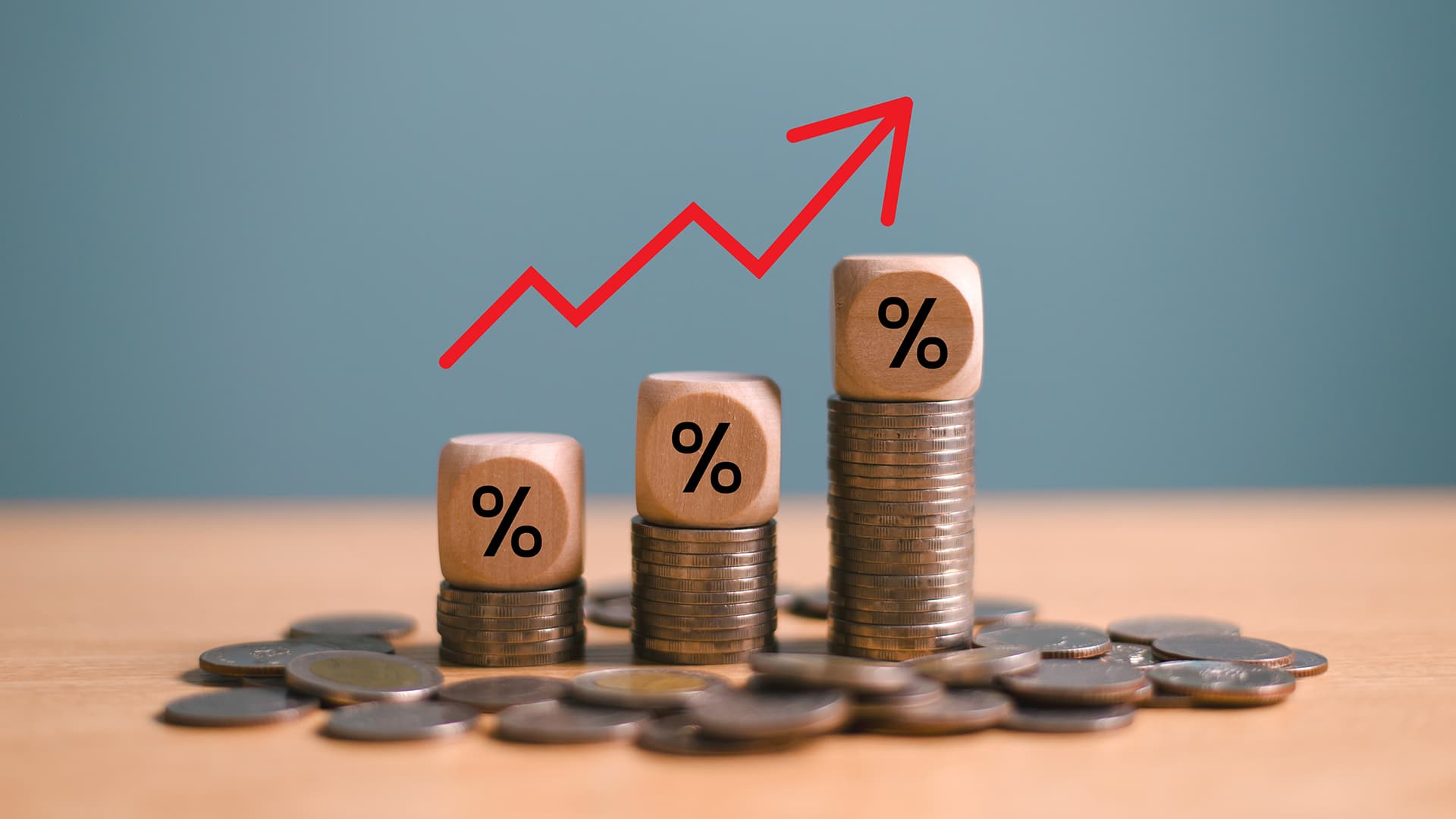
The Yen Carry Trade is a strategy where investors borrow money from Japan at very low interest rates and invest that money in countries where returns are higher, such as India, the United States, or other emerging markets. Japan has maintained extremely low interest rates for many years, often between 0% and 1%, making borrowing very cheap. Because of this, global investors prefer taking loans in Japanese Yen instead of borrowing in other currencies.

The process is quite simple. An investor borrows money in Yen, converts it into another currency like the US Dollar or Indian Rupee, and invests it in assets such as stock markets, bonds, or real estate. Since the returns in these markets are higher, the investor earns a profit from the difference between the low borrowing cost and the higher returns. For example, if someone borrows money at 1% in Japan and earns 12% in the Indian market, the net gain is around 11%.

This strategy plays a major role in driving global liquidity. When the Yen Carry Trade is active, a large amount of foreign money flows into markets like India. This increases liquidity, pushes stock prices higher, and creates a bullish sentiment. That is why sometimes markets rise even when there is no strong local news—because global money is flowing in.

However, the risk starts when Japan changes its monetary policy. If interest rates in Japan increase, bond yields rise, or the Yen becomes stronger, borrowing is no longer cheap. In such situations, investors start reversing their positions, a process known as “unwinding” of the carry trade. They sell their investments in markets like India and the US, convert the money back into Yen, and repay their loans.

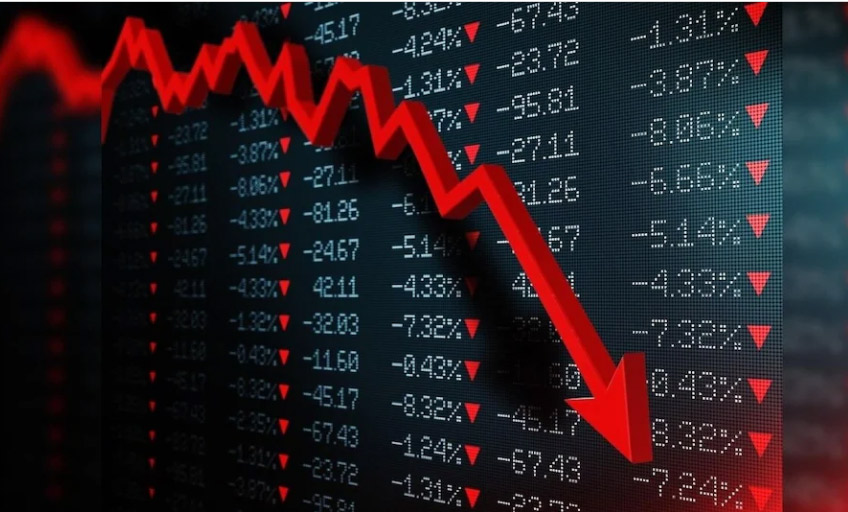
This unwinding can have a strong negative impact on markets. It often leads to heavy selling by foreign investors, sharp market declines, high volatility, and even weakening of the Indian Rupee. Sometimes, even fundamentally strong stocks fall during this phase because the selling is driven by global liquidity, not company performance.

The strength of the Yen is especially important in this entire cycle. When the Yen becomes stronger, it becomes more expensive for investors to repay their loans, increasing their losses. This forces them to exit their investments quickly, which adds further pressure on the markets.

Currently, Japan’s bond yields are slowly rising, and the risk is gradually building, although it has not fully triggered yet. Global markets, including India, are closely watching Japan’s policy decisions. A sharp increase in yields or a strong move in the Yen can impact markets worldwide.

For investors, the key is to remain calm and prepared. Sudden market falls during such events are normal and should not create panic. It is always advisable to avoid over-leverage, keep some cash ready for opportunities, and focus on fundamentally strong companies with a long-term view.

In simple terms, the Yen Carry Trade is like taking a cheap loan and investing it in a profitable business. But if the loan suddenly becomes expensive, you are forced to sell your investment and repay it quickly. This is exactly what happens in global markets.

The stock market is not just about charts or company earnings—it is also about the movement of global money. Understanding concepts like the Yen Carry Trade helps investors stay prepared, avoid emotional decisions, and make smarter investment choices.

Team SS Galaxy Pathshala
Author: Satish Sawant

How Market Cycles Really Work

By Stock Market No Comments

How Market Cycles Really Work

Explained Like Seasons

Every time the market crashes, people say —

“This time is different.”

But the truth is — every market cycle repeats itself.
The only thing that changes is how people feel during each stage.

1. The Simple Truth

The market moves just like the seasons:*

🌸 Spring – Recovery
☀️ Summer – Boom
🍁 Fall – Decline
❄️ Winter – Bust

These four seasons always come and go.

There has never been an exception in the history of the stock market.

2. The Spring of Hope 🌱 (Recovery Phase)

When the economy is weak:
👉 Central banks cut interest rates
👉 Governments increase spending
👉 Investors start feeling hopeful
👉 Assets look cheap
👉 Smart money starts buying quietly

It’s like planting seeds in spring — the results take time, but growth begins underground.

3. The Growth Phase ☀️ (Boom Time)

Now the recovery picks up speed:
👉 Companies start earning higher profits
👉 People feel confident again
👉 Banks lend more freely
👉 Asset prices rise steadily

Optimism spreads everywhere.
Summer has arrived — growth is visible, and everyone feels like a winner.

4. The Warning Signs 🍁 (Greed Zone)

Then comes the turning point:
👉 Everyone seems to be making money
👉 “This time is different” becomes the new slogan
👉 Valuations turn crazy
👉 FOMO (Fear of Missing Out) takes over

This is the fall season — everything looks beautiful, but the leaves are about to drop.

5. The Top 🎢 (Euphoria Stage)

This is the phase of maximum optimism:
👉 Even taxi drivers share stock tips
👉 People quit jobs to become traders
👉 “New era” talks begin
👉 Get-rich-quick schemes flourish

Everyone feels invincible.
But this is where risk is at its peak — and winter is quietly approaching.

6. The Turn 🧊 (Reality Check)

Suddenly, reality returns.
👉 Smart money starts selling
👉 Bad news appears
👉 Prices begin to fall
👉 People stay in denial — “It’s just a small correction”

But this time, buying the dip doesn’t work.
The temperature drops fast — winter is setting in.

7. The Panic ❄️ (Fear Phase)

👉 Forced selling everywhere
👉 Negative media headlines dominate
👉 Investors swear — “I’ll never buy again”
👉 Market sentiment turns extremely bearish

This is winter — dark, cold, and hopeless.
But remember: this is also where the next opportunity is born.

8. The Bottom 🌑 (Hope Returns)

No one wants to buy.
Everyone believes “the market is dead.”
“Cash is king” becomes the new mantra.

And quietly, smart money starts buying again.
A new spring is just around the corner 🌱

9. What Drives the Cycle

The engine behind every market cycle is simple:
Human Nature.

Greed and fear.
Hope and despair.
Memory and forgetting.

That’s why market cycles keep repeating — generation after generation.

10. How to Play Each Phase (Smart Strategy)

🌱 Spring (Recovery): Buy quality assets. Think long term.

☀️ Summer (Boom): Ride the wave, but stay rational.
🍁 Fall (Top): Book profits and reduce exposure.

❄️ Winter (Bust): Stay liquid, buy quality, and be brave.

💎 The Golden Rules
⭐ Every cycle ends — emotions deceive us.
⭐ Patience always wins.
⭐ Cash gives you options.
⭐ Quality companies always survive.
⭐ And most importantly — Winter creates the next Spring.

Final Thought

The stock market is never permanently bullish or bearish —
it simply mirrors human emotion in different forms.

If you can understand the seasons of the market,
you’ll not only survive every cycle but also grow stronger with each one 🌱

✨ Presented by SS Galaxy Pathshala
💼 Where Knowledge Meets Wisdom in the World of Markets
📚 Learn. Trade. Grow.
🌐 www.ssgalaxypathshala.com
📸 Follow us on Instagram & YouTube: @ssgalaxypathshala

Message us

How to Guess if a Stock Will Go Up or Down

By Stock Market No Comments

How to Guess if a Stock Will Go Up or Down

A Simple Guide for Everyday Investors

Every investor wonders:

“Will this stock go up or down?”

The truth is, no one can know for sure. But if we look at certain market trends and company facts, we can make a more informed guess.

At SS Galaxy Pathshala, we use a mix of big investor activity and fair price checks to understand where a stock might be headed.

1. How Big Investors Affect the Market

In India, the stock market is influenced the most by three types of big investors:

FPI – Foreign Portfolio Investors (investors from outside India who invest in stocks, bonds, etc.)
FII – Foreign Institutional Investors (big foreign funds and institutions)
DII – Domestic Institutional Investors (Indian mutual funds, banks, insurance companies, etc.)

Everyone else — people like you and me — are called retail investors.

Here’s the simple rule:

If FPIs, FIIs, and DIIs are buying, the market usually goes up.
If they are selling, the market usually falls.

Example – The 2008 Crash

In 2008–2009, during the global financial crisis, FIIs and DIIs sold a lot of shares. This made the Nifty 50 index drop from around 5,100 points to 2,760 points — a fall of nearly 46%.

Note: You can check daily buying and selling data of FPIs, FIIs, and DIIs on the NSE website. If they are buying, it’s a positive sign for the market.

2. Why Fair Price Matters

Just because big investors are buying doesn’t mean you should buy any stock blindly.

Sometimes, a stock can be overpriced — meaning it’s selling for more than it’s really worth. When that happens, prices often drop later (this drop is called a correction).

That’s why we also look at the fair price of a stock.

If the market price is below fair price → Stock might be undervalued and could go up.

If the market price is above fair price → Stock might be overvalued and could fall.

3. Two Simple Ways to Guess Stock Trends

Method 1 – Check the Fair Price

By looking at a company’s profits, growth, and financial health, we can estimate what its fair price should be.

Overall strong fundamentals.

Intrinsic Value – Helps compare current price with fair price.
Method 2 – Use the P/E × EPS Formula
This is a beginner-friendly way to estimate future stock prices.

What Should You Do as an Investor?

Keep an eye on RBI’s interest rate decisions
Invest in assets that beat inflation — like stocks, mutual funds, gold, etc.
Avoid holding too much cash for long periods
Learn how economic cycles work — don’t just follow tips

Formula:

Future Price = Future P/E × Future EPS

Steps:

Find the average P/E ratio from the past 3 years.
Estimate EPS growth for the next 3 years.
Multiply them to get a possible future price.
This can help you see if the stock has room to grow.

  1. Putting It All Together

To make a better guess about whether a stock will rise or fall:

Check if FPIs, FIIs, and DIIs are buying or selling.

ind out if the stock is undervalued or overpriced.
Look at the company’s financial health and growth.
If big investors are buying and the stock is undervalued with strong growth, it has a better chance of going up.

Disclaimer:

This guide is for learning purposes only. The stock market is unpredictable, and no method can guarantee profits. Always do your own research or take advice from a SEBI-registered financial advisor before investing.

Message us

Inflation & You: The Hidden Force Controlling Your Wallet and the Stock Market

By Stock Market No Comments

Inflation & You: The Hidden Force Controlling Your Wallet and the Stock Market

By SS Galaxy Pathshala

Understanding Big Concepts in Simple Words

What is Inflation?

Let’s say 10 years ago, ₹100 could buy you 10 items at the grocery store.
Today, the same ₹100 can only buy 5 or 6 items.
This slow rise in prices of goods and services over time is called Inflation.

In short your money’s power becomes weaker with time.

Why Is Inflation Important for Everyone?

Inflation affects every individual, not just businessmen or investors.

  1. Groceries become costlier
  2. Rent goes up
  3. Fuel prices rise

Savings lose value if not invested properly
If your income doesn’t grow as fast as inflation, you actually become poorer.

Why Is Inflation Important for the Country?

Inflation also affects the entire economy:

Some inflation is good – It means people are buying, businesses are growing, jobs are being created.
Too much inflation is dangerous – It reduces purchasing power and increases the cost of living.

Too little inflation or deflation is also bad – It means no demand, slow growth, and job cuts.
So, the government and RBI always try to keep inflation “in control”, usually between 4% to 6%.

What Is Deflation? (Opposite of Inflation)

Deflation means prices are falling continuously.
That may sound good, but it’s not.
If people know prices will fall tomorrow, they stop spending today.
This slows down business, reduces profits, and increases unemployment.

Example: In deflation, people delay buying cars, houses, even clothes. This leads to a slowdown in the economy.

How Is Inflation Connected to the Stock Market?

Interesting part — how inflation impacts your investments.

When Inflation Is Under Control:

People spend money
Companies earn more
Stocks perform better
Investors get good returns

When Inflation Is Too High:

RBI increases interest rates
Borrowing becomes costly for companies
Profits reduce
Stock prices fall
Market becomes volatile

High inflation = Fear in stock market

Stable inflation = Confidence in stock market

Real-Life Example (Simple to Understand):

Imagine you run a tea stall.
If milk and sugar prices go up (due to inflation), your cost increases.
You either raise tea prices or make less profit.
Now imagine this happening to thousands of companies listed in the stock market.
So, inflation directly affects their earnings — which affects their share prices.

What Should You Do as an Investor?

Keep an eye on RBI’s interest rate decisions
Invest in assets that beat inflation — like stocks, mutual funds, gold, etc.
Avoid holding too much cash for long periods
Learn how economic cycles work — don’t just follow tips

Final Thought from SS Galaxy Pathshala

You can’t control inflation, but you can prepare for it.
Understand how money moves in the economy, and you’ll make better financial decisions — in life and in the stock market.

Learn With Us

At SS Galaxy Pathshala, we make complex topics like inflation, deflation, interest rates, and investing — easy to understand for everyone.
Whether you are new or already trading, our sessions will sharpen your thinking.

Want to join? Message us now.

Let’s grow smarter together

Message us

Decode the Dip: Crash or Correction?

By Stock Market No Comments

Market Crash vs Correction

What It Really Means and why it’s Not Always Bad
By SS Galaxy Pathshala

Using History, Numbers & Common Sense to Understand Fear
First, Let’s Understand the Terms:

What is a Market Crash?

A sudden and sharp fall in stock prices — usually more than 20% in a short time (days or weeks).
Often triggered by panic, war, global crisis, scams, or black swan events.

What is a Market Correction?

A temporary fall of 10–15% from recent highs.
It happens when markets grow too fast and need to cool down — a “healthy break” before resuming growth.

Why Do Market Crashes or Corrections Happen?

Markets go up on hope and growth, but they also come down due to:

  1. High valuations (stocks become too expensive)
  2. Weak earnings or economic slowdown
  3. Global uncertainty or war
  4. Policy changes (like interest rate hikes)

But every fall is not the end — sometimes it’s just a reset.
Let’s Look at Real Historical Data of Indian market

Year Event Fall (%) Nifty PE PB Dividend Yield
2000 Dot-com Bubble approx. 50% 28+ (very high) approx. 5.5 less than 1%
2008 Global Financial Crisis approx. 60% 28+ approx. 6 approx. 0.8%
2011 Euro Crisis approx. 28% 24+ approx. 4.5 approx. 1.2%
2020 Covid Crash approx. 40% 29.3 approx. 3.7 approx. 1.5%
2022 Global Inflation Fear approx. 15% 25 approx. 4 approx. 1.2%

What We Learn from History:

PE (Price to Earnings):
If PE is 28–30+, market is overvalued — correction/crash likely.

PB (Price to Book):
If PB crosses 4.5–5, stocks are expensive.

Dividend Yield:
 If dividend yield drops below 1%, it means stocks give low returns compared to price — a warning.

What We Learn from History

Crashes come when greed is at its peak — markets ignore reality and chase momentum.
Corrections come to protect you — they bring prices back to fair value.
Smart investors don’t panic — they use corrections to buy great companies at discount.

High PE + High PB + Low Dividend Yield = Red Zone (Be cautious)

Low PE + Low PB + High Dividend Yield = Green Zone (Be greedy when others are fearful)

Simple a Real-Life Example

Let’s say you visit a mall for shopping.

A shirt that usually costs ₹1000 is now priced at ₹3000 (overvalued).
Most people are still buying it because it’s trending. But smart shoppers wait.
Suddenly, there’s a sale. The price comes down to ₹1100. That’s a correction.
If it drops to ₹600 due to panic clearance — that’s a crash.

What to Do During Crash or Correction?

  1. Don’t panic or sell in fear
  2. Check Nifty PE, PB, and dividend yield (we teach how)
  3. Focus on quality stocks — not hype
  4. Keep emergency funds ready

 Very important thing to Remember: Crashes are temporary, growth is permanent

Market always rewards patience. Those who panic sell during crashes miss the biggest gains that follow.

Final Thought from SS Galaxy Pathshala:

“A crash is not the time to cry — it’s the time to learn, prepare, and position yourself.
History shows: The best wealth is built when the market looks the worst.”

Want to Learn How to Use PE, PB, and Yield in Real-Time?

Join our workshops or mentorship sessions at SS Galaxy Pathshala.
where we don’t just teach how to read charts — we teach how the market really works in real life.

Message us to enrol and get your seat in the next batch.

Message us

Understand The Relationship Between Stock Market & Its Participants

By Stock Market No Comments

Who Really Moves the Stock Market?

By SS Galaxy Pathshala

It’s Not Just About Charts & News
Many people think the stock market goes up or down because of news, charts, or company results.
But the truth is — it’s the people behind the market who make it move.
Different types of people enter the market with different goals, and their actions create trends, rallies, or crashes.
At SS Galaxy Pathshala, we believe that before learning “how to trade,” you must understand “

Who is trading and why

1. Retail Investors – The Common People

People like you and me. Students, working professionals, small investors.
They often follow news, YouTube tips, social media, or friends.
What they do: Buy in excitement, sell in fear.
Problem: They enter late and exit early.

Impact: They create big volumes but often face losses.

2. Big Investors – The Smart Money

These are mutual funds, FIIs, big institutions.
They invest big amounts and plan long term.
What they do: Buy silently when prices are low, sell when everyone is excited.
Advantage: They have research, patience, and money power.

Impact: They create big trends.

3. Operators – The Price Controllers

These are hidden players who control a few stocks.
They use money and tricks to move stock prices up or down quickly.
What they do: Spread rumours, trigger stop-loss, trap small investors.

Impact:  Create fake moves and quick profits for themselves.

4. Algo Traders – The Robots of the Market

They use computer programs to buy/sell in milliseconds.
They don’t feel fear or greed — only follow logic.
What they do: Quick trades, take advantage of small price changes.

Impact: Increase volatility (sudden ups & downs).

5. SEBI & Government – The Rule Makers

They don’t invest but create rules and policies.
Their decisions on interest rates, tax, IPO rules, etc., affect the market.

Impact: Long-term direction and market behavior.

The Market is Like a Chessboard

All these players are playing their own game.
Sometimes they fight, sometimes they follow each other — but retail investors usually come last and suffer because they don’t understand who is doing what.

At SS Galaxy Pathshala, we teach you to look deeper — not just at charts but at Market Psychology.
Key Message: Understand the People, Not Just the Price


Before you buy or sell, ask:

* Who is active right now?
* Are big players buying or distributing?
* Is the news real or a trap?

Because in the market,
price is the result — not the reason.
Final Thought from SS Galaxy Pathshala

In the market, money doesn’t move by chance — it moves with purpose.
Know the purpose. Know the player. And you’ll know the path.

Join our upcoming sessions at SS Galaxy Pathshala — where we simplify the stock market for every learner. Learn not just how to trade, but how to think like a trader.

Message us